


Think widening credit spreads are just noise?
Think again.
A move from +25 to +50 basis points often shows rising default concern, +50 to +100 bps signals material stress, and anything above 100 bps is a systemic red flag.
This post cuts through the buzz, showing how to read spread moves, quantify your portfolio’s mark-to-market risk, and pick practical actions like stress tests, sector trimming, or opportunistic buying tied to the size and speed of the move.
Immediate Portfolio Implications When Credit Spreads Begin Widening

Credit spread widening is a real-time signal that the market’s perception of default risk is changing. When the yield difference between corporate bonds and Treasuries expands, investors are demanding more compensation to hold credit risk. Either growth expectations have softened, default probabilities have risen, or liquidity has dried up. These moves happen in basis points, and interpreting them quickly matters. A move of +25 to 50 bps is an early warning, often accompanied by higher volatility. Widening of +50 to 100 bps signals material stress and should trigger a reassessment of credit exposures and liquidity. A spread expansion greater than 100 bps flags elevated systemic risk, and at that point defensive actions aren’t optional anymore.
The damage shows up immediately in bond prices. Bond price change ≈ negative Duration × Δspread. So if you hold a corporate bond with a duration of 4 and spreads widen by 100 bps (1.00%), that bond loses roughly 4% of its value. Scale that across a portfolio: if 40% of your holdings are in corporate bonds with an average duration of 6, a 100 bps widening drags your total portfolio down by approximately 2.4%. That’s a quantifiable hit before any equity correlation kicks in. And equity correlation does kick in. Historically, 100 to 300 bps of spread widening has coincided with equity declines in the range of 15 to 35%, depending on the severity and duration of the underlying stress.
Widening doesn’t affect all sectors equally. Consumer discretionary, energy, small-cap corporates, and regional banks see earlier and larger spread moves because their cash flows are more cyclical and their balance sheets more levered. Utilities and consumer staples hold up better. Less cyclical earnings, lower leverage, more predictable cash. Knowing where your exposures sit on that spectrum tells you how much pain to expect as spreads move.
Five concrete portfolio impacts when spreads widen:
- Mark-to-market losses on existing bond holdings, scaled by duration and notional exposure.
- Rising correlation between bonds and equities, reducing diversification benefits as both asset classes decline together.
- Liquidity strain, especially in high-yield and lower-rated investment-grade bonds where bid-ask spreads blow out.
- Forced sector rotation as money managers reduce cyclical and credit-sensitive positions and move toward quality or cash.
- Higher carry for new buyers, since wider spreads mean new-issue bonds offer better yields. But only if you have the liquidity to survive the interim drawdown.
Credit Spread Mechanics and How to Read Widening Signals

A credit spread is simply the yield difference between a corporate bond and a same-maturity U.S. Treasury bond. Treasuries are treated as the risk-free benchmark, so the spread reflects the extra yield investors demand to compensate for credit risk, liquidity risk, and any structural features of the corporate bond. The spread is quoted in basis points. One basis point equals 0.01%. If a BBB-rated corporate bond yields 5.00% and the 10-year Treasury yields 3.50%, the spread is 150 bps.
Two metrics matter most in practice: the Moody’s Baa minus 10-year Treasury spread (a measure of investment-grade credit stress) and the high-yield (BB or junk) minus 10-year Treasury spread (a measure of speculative-grade credit stress). The high-yield spread has historically been the more sensitive and predictive indicator. A widening of more than 300 bps from recent cycle lows has preceded every U.S. recession since the 1970s. That threshold isn’t a perfect timer, but it’s a strong signal that risk is repricing and that trouble is coming. Widening in 2000 warned of the Dot-Com bust. Mid-2007 moves flagged the coming financial crisis. Early 2020 spikes preceded the COVID downturn.
| Spread Type | Description | Typical Warning Threshold |
|---|---|---|
| Baa – 10-year Treasury | Investment-grade corporate credit spread; measures IG stress and default risk perception | Widening >150 bps from recent low indicates rising IG credit concern |
| BB / High Yield – 10-year Treasury | Speculative-grade (junk) credit spread; leading indicator for recession and systemic stress | Widening >300 bps from recent cycle low historically signals impending downturn |
| CDS Indices (IG / HY) | Credit default swap indices that track cost of default protection; fast-moving liquidity signal | Sharp rise (>25% in 30 days) flags liquidity squeeze and default-risk repricing |
Causes Behind Widening Credit Spreads and Market Stress Indicators

Credit spreads widen when one or more fundamental drivers shift the balance between risk and compensation. The most common cause is an economic slowdown. Softening GDP growth, rising unemployment, or falling manufacturing activity all reduce corporate cash flows and increase the probability that weaker issuers will default. Severe recessions have historically pushed speculative-grade default rates to the 6 to 10% range, well above the through-the-cycle average of around 3 to 4%. When the market starts pricing that scenario, spreads move first.
Rising default probability isn’t always tied to a recession. Liquidity drains, whether from central bank tightening, sudden risk-off flows, or structural shifts in market-making capacity, can widen spreads even when fundamentals are stable. During these episodes, investors flee to Treasuries and the bid for corporate bonds evaporates. Interest-rate shocks also matter. When policy rates or long-term yields rise quickly, highly leveraged borrowers face higher debt-service costs, tighter refinancing conditions, and compressed equity valuations. The feedback loop is direct: higher rates lead to weaker balance sheets, which lead to higher default risk, which lead to wider spreads.
Four practical indicators to monitor alongside absolute spread levels:
- CDS indices for investment-grade and high-yield credits. These trade continuously and often move faster than cash bond spreads, giving you an early liquidity and risk signal.
- Bid-ask spreads in corporate bond markets. Widening bid-ask is a sign that dealers are pulling back, liquidity is thinning, and transaction costs are rising.
- New-issue concessions. When companies have to offer unusually large yield premiums to get deals done, it tells you demand is weak and the market is nervous.
- Three and six-month spread changes. Absolute levels matter, but the pace of change often matters more. A 50 bps move in two weeks is a different animal than 50 bps over six months.
Sector and Rating-Level Impact When Credit Spreads Widen
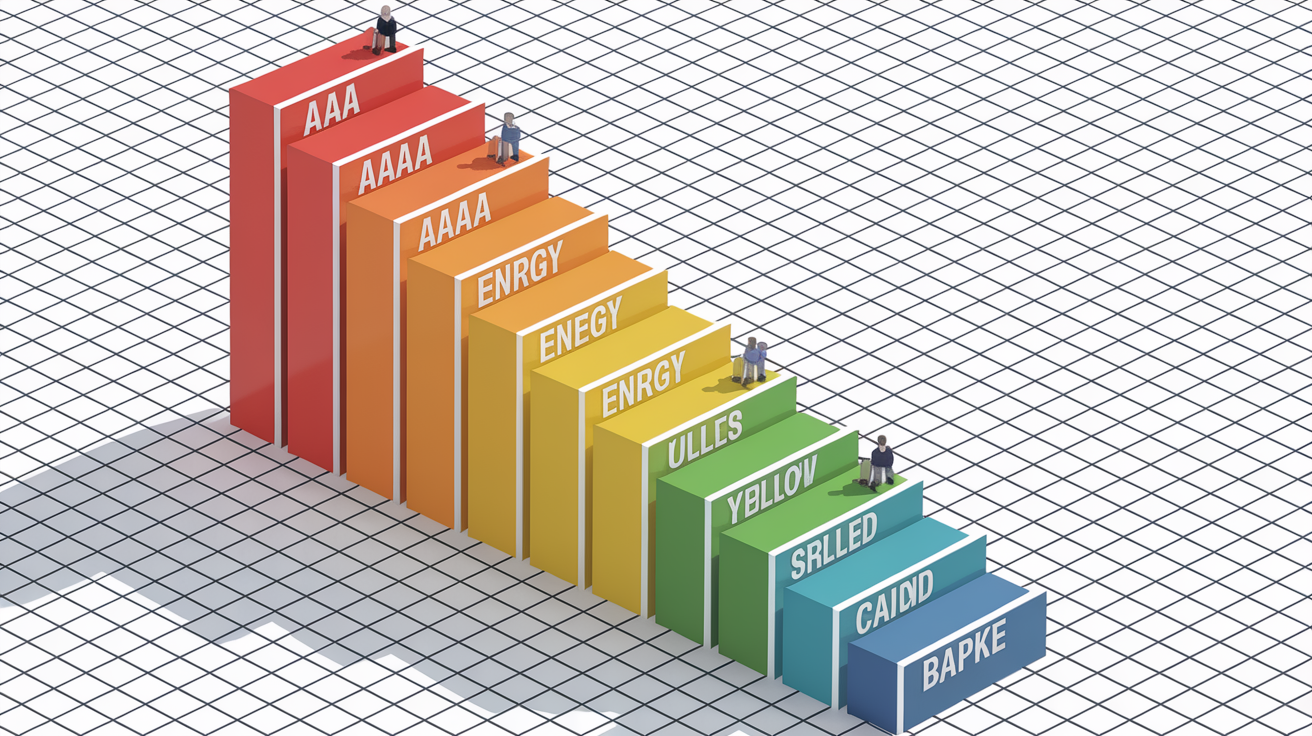
Not all bonds react the same way when spreads widen. The most vulnerable sectors are those with cyclical revenues, high operating leverage, and weaker balance sheets. Consumer discretionary companies face falling demand when consumers pull back. Energy issuers are exposed to commodity price swings and high capex. Small-cap corporates often have thinner margins, less diversified revenue streams, and limited access to capital markets when conditions tighten. Regional banks are sensitive to local economic conditions and can suffer deposit flight or rising loan losses in a downturn.
Utilities and consumer staples hold up better. Utilities generate steady, regulated cash flows with limited cyclical exposure. Consumer staples benefit from inelastic demand. People still buy food, household products, and basic services even when the economy softens. High-quality investment-grade issuers with low leverage, strong liquidity, and diversified operations also see smaller spread moves. The market treats them as near-substitutes for Treasuries in a flight-to-quality environment.
Rating-level risk adds another layer. As of August 2018, the ICE BofAML BBB Corporate Index (C0A4) was roughly six times larger than the ICE BofAML BB US High Yield Index (H0A1). That size differential creates a structural vulnerability: if economic stress triggers downgrades, a wave of BBB bonds could be forced into the high-yield market. Historical through-the-cycle data suggests roughly 4% of BBB credits get downgraded to BB in any given period. But in a recession or credit cycle turn, that percentage can spike. A broad downgrade wave could shift the composition of the high-yield market by approximately 20% on a market-value basis, flooding the market with new supply and pushing high-yield spreads even wider.
Four sector groups ranked by spread sensitivity:
- Highest sensitivity: Consumer discretionary, energy, small-cap corporates, regional banks.
- Moderate sensitivity: Industrials, materials, telecom, some financials.
- Lower sensitivity: Utilities, consumer staples, large-cap diversified industrials.
- Lowest sensitivity: Sovereign-linked issuers, government-sponsored enterprises, AAA-rated corporates.
Quantifying Portfolio Exposure to Spread Widening

Before you can respond to widening spreads, you need to know how much it’ll cost you. Start with a stress test. Run three scenarios: a mild +50 bps widening, a moderate +100 bps move, and a severe +200 bps shock. For each scenario, calculate the mark-to-market impact on your bond sleeves using the spread duration of each holding. Spread duration (sometimes called credit duration) measures the sensitivity of a bond’s price to changes in its credit spread. If you don’t have spread duration from your risk system, a rough approximation is to use the bond’s modified duration and apply it to the spread change.
Take a simple example: you hold a portfolio that’s 60% equities and 40% corporate bonds. The bond sleeve has an average duration of 5. Spreads widen by 150 bps (1.50%). The bond sleeve loses approximately 5 × 1.5% = 7.5%. Your total portfolio takes a hit of 0.40 × 7.5% = 3.0% from the bond side alone. Now layer in equity correlation. If that spread widening coincides with a 15% equity decline (a historically plausible range for moderate stress), your total portfolio drops roughly 0.60 × 15% + 3.0% = 12.0%. That’s the kind of number that changes how you think about rebalancing and hedging.
Next, identify your top-ten exposures by notional, duration, and downgrade or default risk. These are the positions that’ll hurt most if spreads continue to move. For each, calculate the impact of your chosen stress scenarios and decide whether the exposure is sized appropriately for your risk tolerance. If a single issuer or sector represents more than 10% of your credit sleeve and sits in a vulnerable rating bucket (BBB or below), you’re concentrated and exposed.
Calculate your portfolio’s credit beta. How sensitive your overall returns are to broad credit market moves. You can estimate this by regressing your portfolio returns against a credit index (for example, the Bloomberg U.S. Corporate Bond Index or a high-yield index) over the past 12 to 24 months. A credit beta above 1.0 means you’re amplifying credit moves; below 1.0 means you’re dampening them. Use that beta to translate index-level spread changes into expected portfolio impacts.
| Scenario | Spread Move (bps) | Estimated Bond Loss (Duration 5) | Portfolio Impact (40% Bonds) |
|---|---|---|---|
| Mild Stress | +50 | -2.5% | -1.0% |
| Moderate Stress | +100 | -5.0% | -2.0% |
| Severe Stress | +200 | -10.0% | -4.0% |
| Combined (Severe + Equity -20%) | +200 | -10.0% | -16.0% (incl. equity) |
Tactical Portfolio Adjustments When Credit Spreads Widen

Once you’ve quantified the exposure, the next step is deciding what to do about it. The playbook depends on how far spreads have moved, how fast, and what your baseline risk tolerance is. But there are a few tactical levers that work across most scenarios.
First, raise cash. Increasing your cash position by 5 to 15% of total portfolio value gives you dry powder to buy at better levels later and provides a liquidity cushion if you need to meet redemptions or margin calls without selling into a distressed market. The exact percentage depends on your liquidity needs and how long you expect the stress to last.
Second, reduce high-yield and speculative credit exposure. Trim your HY allocation by 10 to 30% of the credit sleeve, depending on how close you are to the 300 bps threshold. Move that capital into investment-grade bonds, shorter-duration corporates, or Treasuries. The goal is to swap credit risk for interest-rate risk or eliminate risk altogether.
Third, shorten your portfolio duration. Reducing duration by 0.5 to 2 years lowers your sensitivity to both rate moves and spread moves. For example, if you cut duration from 6 to 4, a 100 bps spread widening that would’ve cost you 6% now costs you 4%. That’s a 200 bps improvement in downside protection. You can shorten duration by selling longer-dated bonds and buying shorter maturities, or by using interest-rate futures and swaps to hedge the rate component while keeping credit exposure.
Fourth, consider hedging with credit default swaps or index futures. Buying CDS protection on a specific issuer or a basket of credits can offset mark-to-market losses if spreads continue to widen. The cost of protection varies, typically from tens of basis points per year for high-quality investment-grade names to a few hundred basis points for speculative-grade credits during periods of stress. Hedge 25 to 100% of your at-risk exposure depending on cost, liquidity, and conviction. If CDS is too complex or expensive, simpler alternatives include selling credit-sensitive equity sectors (financials, cyclicals) or buying puts on high-yield ETFs.
Five tactical adjustments in order of implementation priority:
- Raise cash by 5 to 15% to ensure liquidity and provide capital for opportunistic purchases.
- Reduce high-yield exposure by 10 to 30% and rotate into investment-grade or Treasuries.
- Shorten portfolio duration by 0.5 to 2 years to reduce price sensitivity to spread moves.
- Hedge 25 to 100% of concentrated credit exposures using CDS, bond futures, or equity put options.
- Rotate equity allocations from cyclicals and financials into utilities, staples, and quality large caps.
How Investor Profiles Should Interpret and Respond to Spread Widening

Different investors should respond differently based on time horizon, liquidity needs, and risk capacity. Conservative investors (those focused on capital preservation with short time horizons or near-term spending needs) should move quickly when spreads widen. Cut high-yield exposure to less than 5% of the fixed-income sleeve, raise cash to 5 to 10% of total assets, and shift 50 to 80% of bond holdings into Treasuries or high-quality investment-grade corporates. The goal is to protect capital and avoid forced selling into illiquid markets. Accept lower yield in exchange for lower volatility and higher liquidity.
Moderate investors (those targeting total return with a balanced risk profile) have more flexibility. Trim cyclical equity positions by 10 to 25% when spreads widen past the 150 to 200 bps mark from recent lows. Reduce high-yield bond allocations by 25 to 50% and rotate into shorter-duration investment-grade bonds. Maintain a 5% cash buffer for rebalancing and opportunistic purchases. Use selective hedges (index puts, sector rotation) rather than wholesale de-risking. The goal is to dampen drawdowns without abandoning upside participation if conditions stabilize.
Aggressive investors (those with long horizons and high risk tolerance) can maintain most of their exposure but should still reduce leverage and speculative positions. Set pre-defined triggers: if high-yield spreads widen more than 300 bps from cycle lows, implement defensive tilts (trim 10 to 20% of speculative credit, hedge top-ten concentrated exposures). Keep duration neutral or slightly shorter than benchmark. Use spread widening as a signal to prepare for tactical buying opportunities, not as a reason to exit the market entirely. The goal is to preserve the option to buy at distressed prices without suffering catastrophic losses in the interim.
Three profile-specific action summaries:
- Conservative: Shift 50 to 80% to Treasuries/IG, reduce HY to <5%, hold 5 to 10% cash, avoid all speculative positions.
- Moderate: Trim cyclicals 10 to 25%, reduce HY 25 to 50%, maintain 5% cash, use selective hedges, rotate to quality.
- Aggressive: Retain most exposure, reduce leverage, set >300 bps trigger for defensive tilt, prepare capital for tactical buys.
Historical Lessons From Past Credit Spread Widening Events

History shows that credit spreads are a leading, not lagging, indicator. They widen before the headlines turn bad, before earnings collapse, and before equity markets fully price in the downturn. During the 2008 financial crisis, high-yield spreads peaked in the range of 1,500 to 2,000 bps as the system froze and default rates spiked. The move started in mid-2007 (well before Lehman failed) and investors who waited for confirmation from equity markets or GDP data took the full hit. By the time the S&P 500 bottomed in March 2009, spreads had already started to compress as distressed buyers stepped in.
The March 2020 COVID shock was faster but followed the same pattern. High-yield spreads peaked near 1,200 bps as liquidity evaporated and the Fed stepped in with emergency facilities. The widening happened in a matter of weeks, not months, but the signal was clear: credit markets were pricing a severe economic contraction before equity volatility fully reflected that risk. Investors who moved early (raising cash, trimming HY, shortening duration) avoided the worst of the drawdown. Those who hesitated because “it’s different this time” or “the Fed will fix it” watched portfolios drop 20 to 30% in a month.
The 2000 Dot-Com episode was slower but just as predictive. High-yield spreads began widening in late 1999 and early 2000, signaling stress in speculative credits and weakening growth. Equities didn’t peak until March 2000, and the NASDAQ didn’t bottom until late 2002. But the credit market told you the cycle was turning more than a year before the equity bear market ended. In all three cases, the rule held: widening of more than 300 bps from recent lows was a strong and early warning that trouble was coming.
| Year | Spread Peak (bps) | Market Outcome |
|---|---|---|
| 2008 Financial Crisis | ~1,500–2,000 | Severe recession; equity drawdown >50%; default rates spiked to ~10% |
| March 2020 COVID | ~1,200 | Sharp but short recession; equity drawdown ~35%; rapid Fed intervention |
| 2000 Dot-Com | ~1,000 | Tech-led equity bear market; NASDAQ declined ~78%; HY default rates rose to ~8–10% |
Final Words
When spreads start widening, it signals rising default risk and liquidity strain. That hits bond prices via duration math—for example, duration 4 × 100 bps ≈ -4%—and often spills into equities, with cyclicals and regional banks most at risk.
Actionable steps matter: run 50/100/200 bps stress tests, trim high-yield and cyclicals, shorten duration, hold 5–15% cash, and consider partial CDS hedges. Watch CDS indices and 3–6 month spread moves.
Interpreting credit spread widening for portfolios is about clear thresholds, simple math, and timely decisions. Do that and you limit downside while finding selective opportunities.
FAQ
Q: What do widening credit spreads indicate?
A: Widening credit spreads indicate rising perceived default risk, weaker growth, or liquidity strain. Small moves (+25–50 bps) warn early, +50–100 bps signal material stress, and >100 bps suggests systemic risk.
Q: How to interpret credit spreads?
A: To interpret credit spreads, read them as the yield gap versus same‑maturity Treasuries in basis points. Track investment‑grade versus high‑yield tiers; monitor moves and 300 bps widening from cycle lows often precedes recessions.
Q: Are wider spreads better?
A: Wider spreads are not inherently better; they offer higher yield for new buyers but reflect worsening credit conditions, higher default and price risk for holders—often accompanied by equity weakness and liquidity strains.